xvxww-7c648f-7f2eaf
telte-de93d3-9f6f33
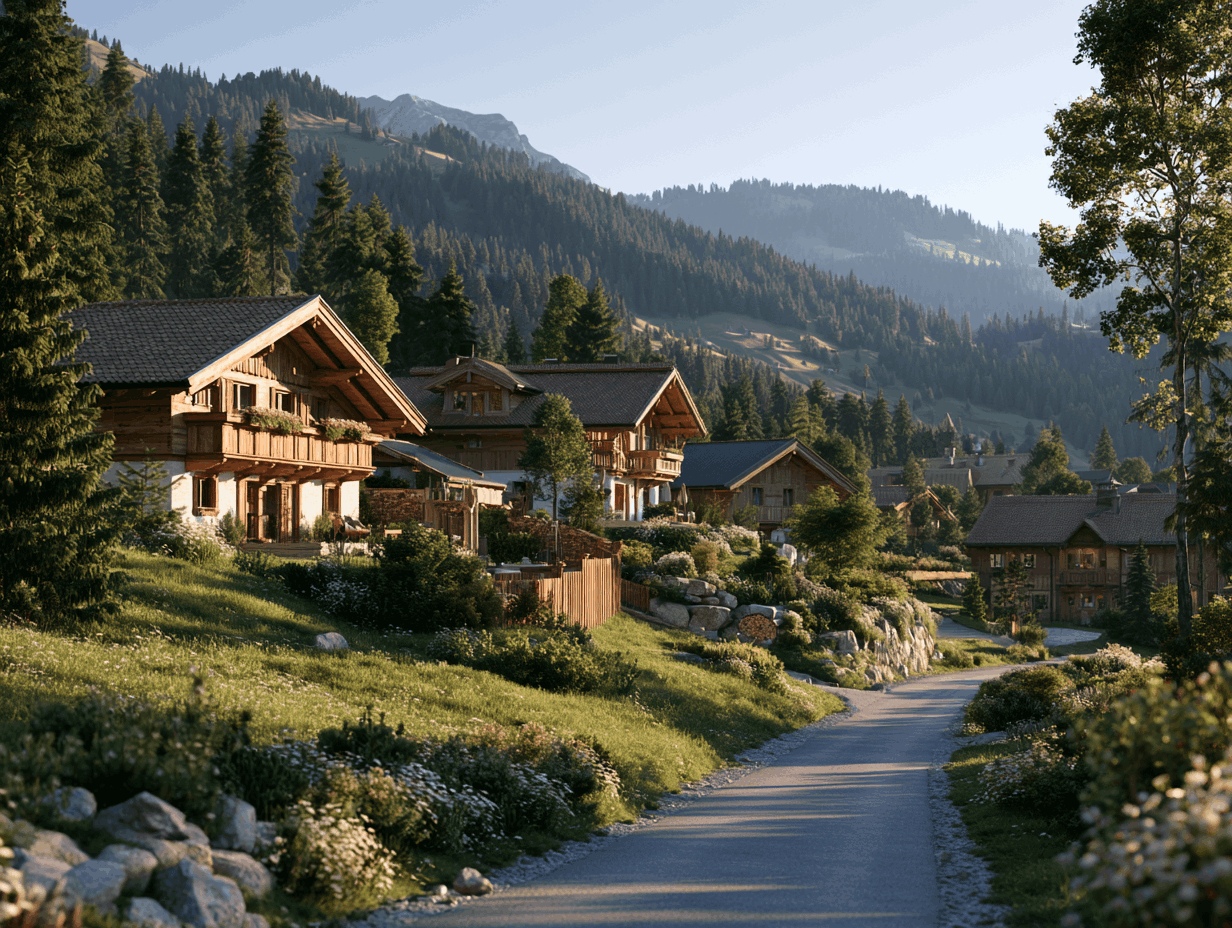
High in the Alps the villages that stay memorable are rarely the ones with the largest hotels. They sit on slopes or in shallow bowls where the views open wide and the architecture still belongs to the place. Wooden balconies, stone bases, steep roofs built for snow. Paths lead out from the last houses into meadows and higher trails without much ceremony. These settlements keep a working feel even when visitors appear.
In the Swiss valleys some smaller clusters remain quieter than the well known resorts. Houses stand close together, their dark timber weathered by decades of weather. From the edge of the village the eye travels across open pasture to the next ridge. Walking paths start almost at the doorstep and climb gently at first before steepening. Locals still move hay and tend animals in the traditional way during the warmer months. The evenings settle early once the light leaves the slopes.
Further east in the Austrian highlands similar patterns appear. Villages perch above the main valley floor, reached by narrow roads that switch back more than once. The architecture mixes wood and whitewashed walls, flower boxes still common in summer. Trails fan out toward alpine pastures and small lakes that sit higher up. The air feels thinner and cleaner, and the silence after dark is almost complete. People here tend to keep to themselves until a greeting is offered first.
On the Italian side of the range the style shifts. Stone becomes more common, roofs less steep in some areas, and the villages often face south to catch more sun. Paths connect one settlement to the next along old mule tracks that have been improved over time. The views drop toward lower valleys and distant peaks that change colour through the day. Life moves at a measured pace. Shops open later, close for a long midday break, and the main square stays the centre of any small gathering.
French alpine villages in the quieter sectors follow their own logic. Traditional chalets gather around a church or a simple fountain. Walking routes leave the last buildings and head into forests that open onto high meadows. The architecture shows care for snow load and wind, with wide eaves and solid bases. In late afternoon the light softens across the grass and the mountains take on deeper tones. Visitors who stay overnight notice how quickly the place returns to its own rhythm once the day trippers leave.
What these highland spots share is a lack of pressure to perform. The views do most of the work. Paths exist for walking rather than for timed circuits. The buildings look lived in. Practical points stay simple. Public transport reaches many of them but often only a few times a day, so checking the schedule ahead avoids long waits. Accommodation is usually small scale, family run, and better booked in the peak summer weeks. Weather can shift fast, even in July, so a light layer for wind remains useful. The real adjustment is slowing down enough to notice how the light moves across the slopes and how the paths feel underfoot. These villages reward that kind of attention more than any checklist.