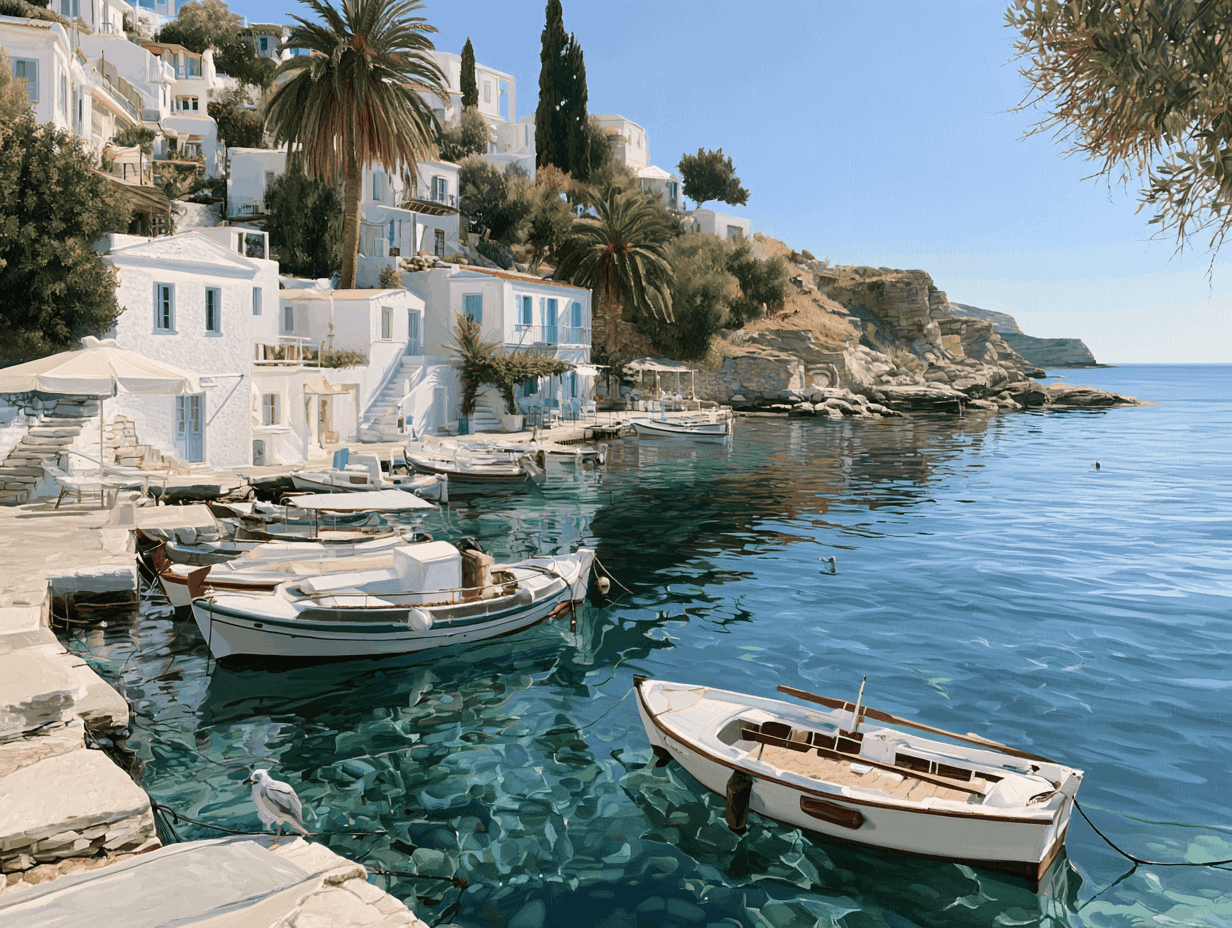
The Aegean holds more quiet edges than the busy ferry routes suggest. Away from the islands that fill every guidebook, smaller shores and lesser known bays keep a softer pace. Outside the peak weeks of July and early August many of these places feel almost empty by mid morning. The water stays clear, the paths stay simple, and the evenings belong mostly to the people who live there year round.
Some of the quieter islands sit further from the main hubs. Their harbours remain small, with fishing boats tied closer to the quay than tourist craft. Whitewashed houses climb the slopes in loose clusters rather than tight tourist rows. Beaches tend toward pebbles or narrow sand strips backed by low hills. The wind can rise in the afternoon, but the mornings often stay still enough for long swims. Local cafes open when they open, and the menu stays short. Visitors who arrive without a fixed plan find the rhythm easier to match.
Certain bays on the larger islands also hold their calm. Reached by secondary roads or short boat hops, they avoid the main beach clusters. The shore curves gently, the water deepens quickly, and the only sounds for stretches of the day are waves and the occasional goat bell from higher ground. Shade comes from a few tamarisk trees rather than rows of umbrellas. In late spring and again from mid September these spots feel especially open. The light softens earlier, and the sea holds its warmth longer than expected.
Further south and east the pattern continues on islands that see fewer international arrivals. The architecture stays low and practical, the roads narrow, and the sense of distance from the mainland remains strong. Nights fall quiet after the last ferry leaves. Stars appear clearly once the village lights dim. Walking paths link one small settlement to the next across dry hills, and the views drop toward open water on both sides in places.
What these shores share is a resistance to constant activity. There is little pressure to move from one attraction to the next. Mornings stretch, afternoons often include a long pause in the shade, and evenings settle into simple meals and conversation. The sea itself becomes the main reference. Practical points stay straightforward. Ferry schedules thin out outside high summer, so checking times the day before helps. Accommodation leans toward small rooms and family places rather than large complexes. Cash remains useful in the tiniest harbours. The main adjustment is accepting that these places do not deliver a packed programme. They offer clear water, open horizons, and a daily pace that belongs first to the island itself.