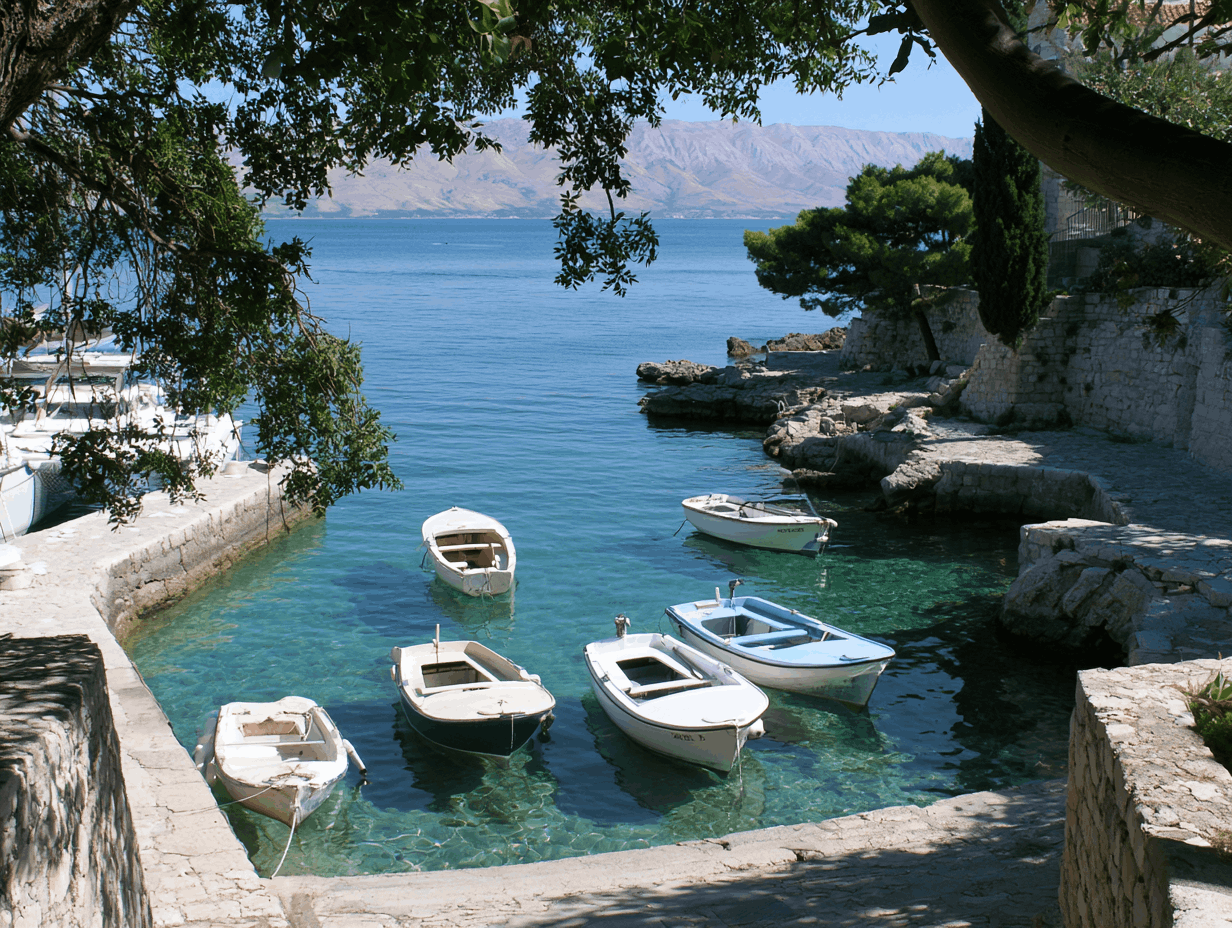
The Adriatic holds more quiet corners than the well known resort strips suggest. Away from the busiest harbours and the clusters of large hotels, smaller towns keep a slower waterfront rhythm. Fishing boats still leave early, cafes open when the owners feel ready, and the evening promenade belongs mostly to locals. These places do not try hard to impress. They simply continue.
Along the Croatian side, a few spots stand out for staying relatively calm even in summer. Further north near the Istrian coast, some harbour towns keep their scale modest. Stone houses lean close to the water, the main square stays small, and the daily catch still appears on local tables. South of the larger centres, quieter bays appear where the road narrows and the beaches remain pebbly rather than manicured. The water stays clear, and the sound of waves replaces the usual resort noise. People here tend to greet each other by name. Visitors who arrive without a packed agenda fit in more easily.
On the Montenegrin coast the pattern continues in certain stretches. Away from the main bay towns, smaller settlements sit between the mountains and the sea. The waterfront path may be short, the cafes few, and the nights quiet after ten. Local families still dominate the evening walks. The backdrop of steep hills makes the horizon feel closer, and the light changes quickly in the late afternoon. These places reward a longer stay more than a quick stop.
Italian stretches of the Adriatic offer their own quieter pockets. In the central regions some older fishing towns keep a working harbour rather than a purely tourist one. The daily market still matters, and the restaurants lean toward simple grilled fish rather than long international menus. The pace slows further once you leave the train stations behind. Even in peak weeks the streets empty earlier than in the more famous western coasts.
What ties these towns together is the absence of constant performance. There is little pressure to fill every hour. Mornings stretch, afternoons often include a long pause, and evenings settle into conversation rather than entertainment. The waterfronts stay functional as much as scenic. Boats come and go, nets dry in the sun, and the sea remains the main reference point.
Practical notes stay light. Public transport links exist but run less frequently than in the larger hubs, so checking times in advance helps. Accommodation tends toward smaller guesthouses and family run places. Cash still circulates more freely in the tiniest spots. The biggest shift for many visitors is simply adjusting expectations. These towns do not deliver constant novelty. They offer space, calm water, and a daily rhythm that belongs first to the people who live there.